
Considering cold water swimming after 60? Discover its possible benefits, serious risks and essential safety advice before you take the plunge into colder waters safely.
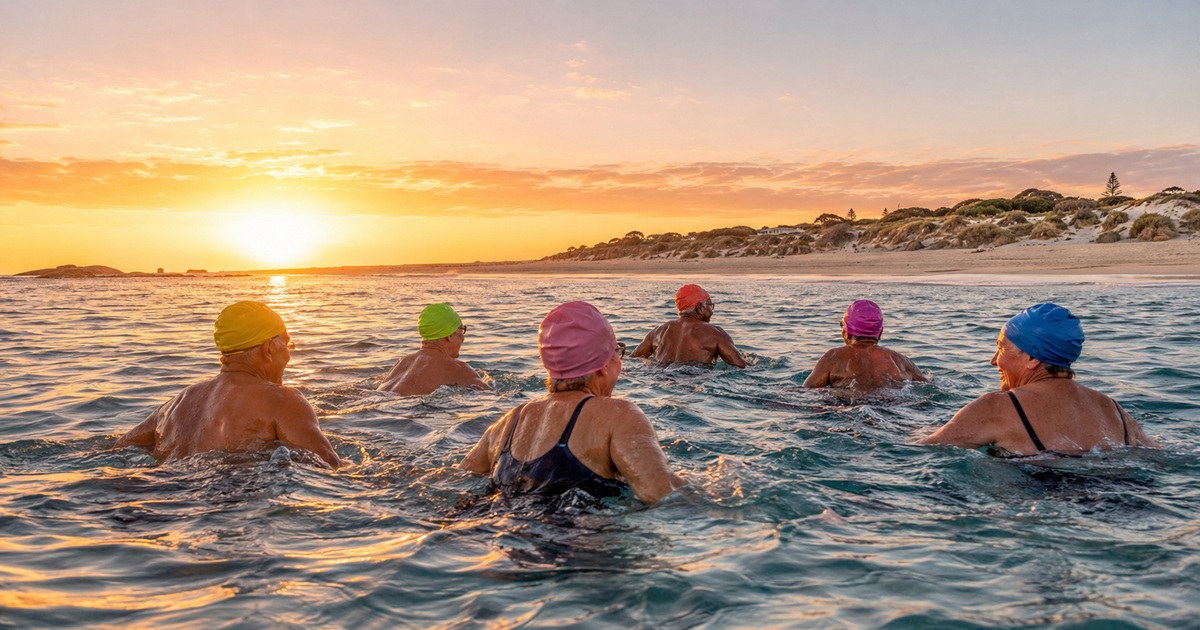
It can sharpen the senses, lift the mood and create an extraordinary sense of achievement. But cold water is not a wellness toy – and bravado has no place in it. Here is how to start safely, what the science actually supports and whether very cold water poses a particular risk to women.
The first few seconds can feel brutal. Your skin burns. Your chest tightens. Your breathing tries to race ahead of you. Every instinct tells you to get out.
Then, if the conditions are safe and you remain in control, something changes. The breathing settles, the panic recedes and the world becomes startlingly clear.
This powerful physical and psychological jolt helps explain why cold water swimming has developed such a devoted following. Regular swimmers talk about energy, resilience, friendship and a sense of being intensely alive.
But cold water deserves respect. It can impair breathing and movement, place sudden strain on the heart and contribute to drowning. It does not care how fit, experienced or determined you believe you are.
What is Cold and Ice Water Swimming?
There is no single worldwide definition. However, the Royal National Lifeboat Institution describes water at 15°C or below as cold enough to seriously affect breathing and movement.
That may not sound particularly chilly – but water draws heat away from the body far faster than air. A pleasant day on land does not make the sea, lake or dam safe.
At the extreme end, the International Ice Swimming Association defines an ice swim as one completed in water at 5°C or colder, without a wetsuit. That is a specialist sport requiring training, medical screening, supervision and tightly controlled conditions. It is not a sensible starting point for a beginner.
Why are people hooked?
Ask ten cold water swimmers why they do it and you may receive ten different answers.
Some love the physical challenge. Others value the silence of an early-morning swim, the camaraderie of a local group or the feeling of meeting discomfort head-on instead of avoiding it.
The first contact with the water is always a jolt, but that quickly gives way to exhilaration, leaving me feeling uplifted and physically stronger
The appeal is real – but personal testimony should not be mistaken for medical proof. Cold water swimming may make many people feel better; that does not mean it cures every condition as some people may believe.
The possible benefits of cold water swimming
A rapid lift in mood
Cold immersion triggers a powerful stress response involving the nervous system. Many swimmers report feeling alert, energised and happier afterwards. Exercise, time in nature, social connection and the satisfaction of completing a difficult task may all contribute. That makes it difficult for researchers to isolate the effect of the cold itself. The emerging evidence is interesting, but cold water swimming should not be presented as a replacement for professional mental-health treatment.
A stronger sense of resilience
Entering cold water voluntarily can teach you to stay calm while your body is sounding an alarm. For some swimmers, repeatedly managing that discomfort builds confidence that carries into everyday life. The aim, however, is controlled adaptation – not proving that you can suffer longer than the person beside you.
Exercise without the heat
Swimming can improve cardiovascular fitness, strength and endurance while placing relatively little impact on the joints. Cold water may also feel refreshing to people who dislike exercising in hot conditions.
Friendship and community
The social benefit may be one of the most important parts of the experience. Regular swimming groups create routine, accountability and belonging.
Possible relief from menstrual and menopausal symptoms
A University College London-led survey of 1,114 women, who already swam in cold water, found that many reported improvements in anxiety, mood swings, low mood and hot flushes. Among menopausal respondents, 46.9% reported improved anxiety and 30.3% reported improvement in hot flushes.
That is encouraging, but it is not proof of cause and effect. The study relied on self-reported experiences from existing swimmers, meaning participants may have been more likely to respond if they had noticed a benefit. The researchers said more work is needed to determine the most effective-and safe-temperature, duration and frequency.
Are there risks for women swimming in cold water?
There is no well-established scientific rule stating that all women must avoid swimming below one specific temperature.
Claims that women should never enter water colder than 10°C, 12°C oversimplifies a complicated subject.
Women and men can differ, on average, in body composition, body size, muscle mass, fat distribution and circulation. Hormonal changes, age, menstrual stage, menopause, pregnancy, medication and certain health conditions may also influence how an individual experiences or responds to cold.
But being male or female can tell you how safely someone will cope.
A smaller person may cool faster because of their surface-area-to-mass ratio. Body fat can provide insulation, while muscle activity generates heat. Experience and acclimatisation may alter the initial response-but neither makes a swimmer immune to cold shock, loss of movement or hypothermia.
The danger is therefore not triggered by a magical women-only number. Risk rises as water gets colder, exposure lasts longer and conditions become more demanding.
Know the temperature, shorten the swim as the water cools and get out while you still feel capable.
Anyone with a heart condition, uncontrolled blood pressure, circulation problems, asthma, epilepsy, Raynaud’s phenomenon or another relevant medical condition should seek individual medical advice before starting. In fact, YEI recommends that anyone considering cold water swimming seeks medical advice first.
Cold shock: The danger that arrives first
Many beginners worry primarily about hypothermia. The more immediate threat is often the body’s response during the first moments of immersion.
Sudden exposure can cause:
• An involuntary gasp
• Rapid, difficult-to-control breathing
• A sharp rise in heart rate and blood pressure
• Panic and disorientation
• An inability to coordinate an effective swimming stroke
The RNLI warns that water at or below 15°C can seriously affect breathing and movement. The initial response can overwhelm even a strong pool swimmer.
See the RNLI’s cold-water-shock guidance
Never jump or dive straight into cold water. Enter gradually, keep your face clear initially and concentrate on settling your breathing before attempting to swim.
How to Start Cold Water Swimming Safely
1. Have an honest health check
If you have a medical condition, take medication that affects the heart or circulation, are pregnant, or are uncertain about your health, speak to an appropriate healthcare professional first.
Fitness is not a guarantee of safety. Cold water can create significant cardiovascular strain in apparently healthy people too.
2. Begin before the water becomes extremely cold
If possible, start during a milder season and continue regularly as temperatures fall. Gradual exposure gives you time to learn how your body reacts. A beginner’s first experience should not be an ice swim.
3. Choose a known, lifeguarded location
Learn about tides, currents, waves, depth, underwater obstacles, boat traffic, wildlife and water quality. Conditions matter just as much as temperature. If there is a warning, red flag, strong current, storm, poor visibility or suspected pollution, do not enter.
4. Never swim alone
Go with an experienced group or trained open-water coach. Tell someone on land where you are swimming and when you expect to finish. Water Safety Ireland’s advice is blunt and memorable: safe swimmers do not swim alone.
5. Wear equipment that makes you visible
Depending on the conditions, consider:
• A correctly fitted wetsuit
• A brightly coloured swimming cap
• A tow float
• Neoprene gloves and boots
• Goggles
• Warm, easy-to-put-on clothing for afterwards
A tow float improves visibility and may hold small safety items, but it is not automatically a lifesaving device. It does not replace swimming ability, supervision or a proper personal flotation device where one is required.
6. Enter slowly and control the urge to gasp
Do not leap in to “get it over with”. Use a stable entry point, allow the water to reach the body progressively and keep the head above water until breathing is controlled. If you cannot settle your breathing, get out.
7. Keep the first sessions extremely short
There is no safe universal equation such as “one minute per degree”. Those formulas ignore body size, weather, wind, clothing, acclimatisation and health. A brief dip may be enough. Beginners should focus on calm breathing and a controlled exit, not distance or time.
8. Stay close to your exit
Cold can reduce strength and coordination before you fully recognise what is happening. Swim parallel to the shore or remain within easy reach of a reliable exit. Turn back early. The return journey is part of the swim.
9. Get out before you feel you have to
Warning signs include:
• Increasingly violent or uncontrollable shivering
• Numbness
• Clumsy hands
• Difficulty speaking
• Confusion or unusual behaviour
• Extreme fatigue
• A stroke that becomes shorter, slower or uncoordinated
• Blue or very pale skin
• Breathing trouble, chest pain or palpitations
Do not treat these symptoms as a test of character. Leave the water and seek help.
The swim is over, but the cooling may continue
Core body temperature can continue falling after you leave the water, a phenomenon often called afterdrop. Dry yourself, remove wet clothing and dress immediately in warm layers, including a hat. Move to a sheltered place and have a warm, non-alcoholic drink if you are fully alert and able to swallow. Do not drive until you are warm, mentally clear and physically coordinated. Avoid jumping straight into a scalding shower, aggressively rubbing numb skin or using alcohol to “warm up”. If someone is confused, very drowsy, breathing abnormally or losing consciousness, treat it as an emergency.
When cold water swimming becomes reckless
Cold water culture can occasionally reward the wrong things: longer times, lower temperatures, fewer clothes and dramatic social-media footage. That is not resilience. It is risk dressed up as achievement. Experienced swimmers can still make mistakes. Acclimatisation may reduce the shock response, but it does not abolish hypothermia, heart strain, dangerous currents or drowning. There is no medal for staying in until your hands stop working.
Frequently Asked Questions
What temperature is considered cold water?
The RNLI treats water of 15°C or below as cold because it can seriously affect breathing and movement. Even warmer water can become dangerous with long exposure, poor weather or difficult conditions.
Is cold water swimming safe for women?
It can be enjoyed by many healthy women when approached carefully, but it is not risk-free. There is no scientifically established women-only minimum temperature. Personal health, body size and composition, acclimatisation, exposure time and environmental conditions all matter.
Should women avoid water below 10°C? There is no universal evidence-based rule that every woman must avoid water below 10°C. However, 10°C is very cold, and the margin for error narrows as temperatures fall. Beginners should not start at such low temperatures.
Can cold water swimming affect periods or fertility?
Research is limited. Some regular swimmers report improvements in menstrual mood symptoms, but this does not establish that cold swimming regulates hormones or improves fertility. Claims that ordinary short cold swims either enhance or damage female fertility are not supported by strong human evidence. If your cycle changes significantly, you are trying to conceive or you have a reproductive-health condition, seek medical advice rather than relying on online cold-plunge claims.
Can cold water swimming help with menopause?
Some women report reductions in anxiety, mood swings, low mood and hot flushes. A UCL-led survey supports further investigation, but it was observational and self-reported. Cold water swimming should not be described as a proven treatment or replacement for appropriate menopause care.
How long should a beginner stay in?
There is no universal safe duration. Start with a very brief, supervised dip and leave while breathing, movement and thinking remain normal. Water temperature, weather, clothing, experience and individual physiology all change the answer.
Do I need a wetsuit?
A wetsuit can provide insulation and buoyancy and is often sensible for beginners. It does not eliminate cold shock or make unlimited exposure safe. Its thickness and fit should match the activity and conditions.
Can I swim alone if I am experienced?
No. Experience does not prevent cramps, cardiac events, currents, injury or sudden incapacitation. Swim with others at a recognised location and make sure someone can raise the alarm.
Should I put my head under the water?
Beginners should enter gradually and keep their face clear until breathing is controlled. Facial immersion can intensify physiological responses to cold. A swimming cap does not prevent meaningful heat loss from the entire body.
Can I cold-swim after drinking alcohol?
No. Alcohol impairs judgement and coordination and can create a misleading sensation of warmth while increasing heat loss. Save any celebratory drink until you are safely out, warm and recovered-and choose a non-alcoholic warm drink first.
The Bottom Line
Cold water swimming can feel electrifying. It may lift mood, encourage exercise and create powerful friendships. For some women, it may also ease aspects of menstrual or menopausal discomfort. But the science is still developing, and the cold must never be romanticised. There is no universal forbidden temperature specifically for women. There is also no temperature at which determination defeats physiology.
Start gradually. Swim with others. Know the conditions. Keep it short. Get out early.
The best cold water swimmer is not the person who stays in longest.
It is the person who goes home safely.
A YEI article
Still Making Waves: Three Swimmers in Their 70s Who Brave the Cold