
Discover how gardening brings joy and savings in part one of Lesley’s three-part series on growing fresh food easily from everyday kitchen scraps at home.
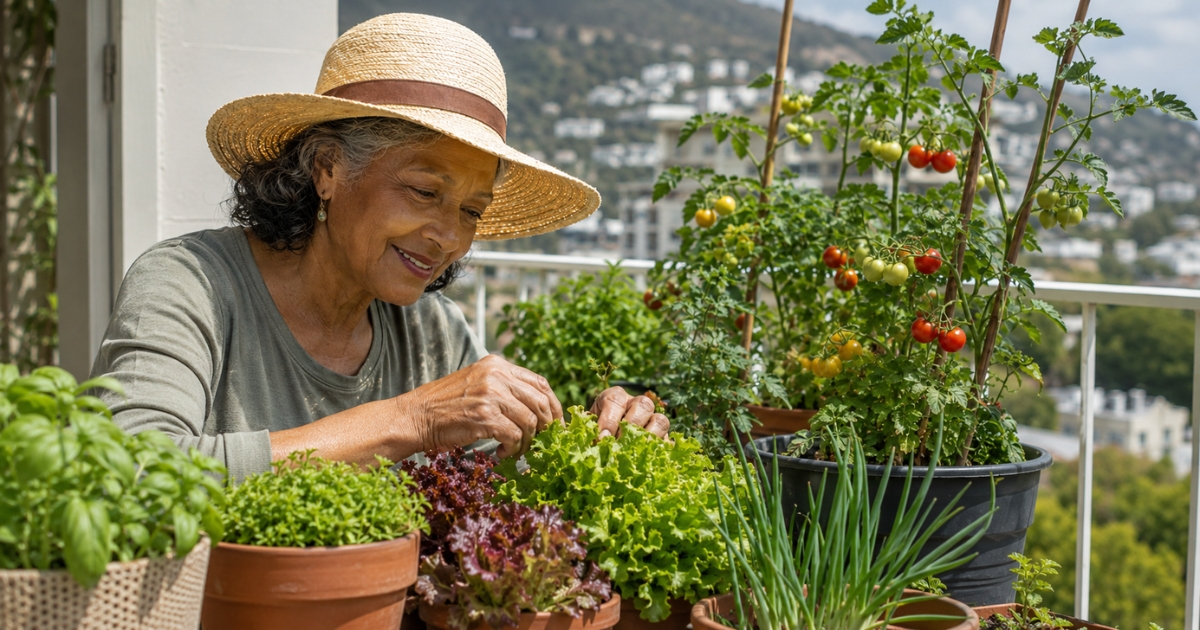
For me, gardening is one of those simple pleasures that brings real joy. You are outside in the fresh air and sunshine, with your hands in the soil, doing something that feels useful and calming at the same time.
There is so much happening in the world that can feel overwhelming, but in the garden everything slows down. You plant something, water it, check on it and watch it grow. Eventually, you pick it and use it in a meal.
That connection, from soil to plate, is incredibly satisfying. Home-grown food seems to taste better too. There is something very special about eating something you have grown yourself, even when it began as a little offcut from something you bought at the shops.
A little patch of happiness
For South Africans over 55, gardening can be one of the most rewarding hobbies to enjoy, particularly during spring and summer.
It gets you outside, keeps your hands and mind busy and gives you something gentle and purposeful to do. There is always something to look forward to, whether it is the first tiny shoot, a new leaf or something finally ready to be picked.
Gardening can also provide gentle physical activity. Watering, planting, reaching, digging and moving between pots all keep the body active. Just work at a pace that feels comfortable and use raised beds, containers or long-handled tools if bending and kneeling are difficult.
No garden? No problem
You do not need a large garden, fancy equipment or an expensive setup to start growing food. A patio, balcony, raised planter, old crate or sunny windowsill may be all you need. Jam jars, small glasses, recycled containers and pots you already have can all be put to work.
Begin with one or two easy experiments. There is no need to transform your entire outdoor space overnight. One jar containing a spring onion or one pot holding an onion base is enough to begin.
A quick word about gardening safely
The South African sun is not a joke. Wear a hat and sunscreen, keep drinking water nearby and try to garden earlier in the morning or later in the afternoon, when the heat is more forgiving.
Getting sunburnt while trying to grow spring onions is not the kind of gardening memory anyone needs. Place pots somewhere accessible and avoid leaving tools, hoses or containers where they could become tripping hazards. If you are lifting soil, crates or large pots, divide the load or ask someone to help. Give your kitchen scraps another life
One of the easiest and cheapest ways to begin is by using vegetable offcuts you already have in your kitchen.
Instead of automatically throwing every root, base or top into the bin, take a closer look. Some of those scraps may have another life ahead of them.
I have had wonderful results experimenting with kitchen offcuts, and it still feels a little like magic every time something begins to grow.
Not every attempt will succeed, but the materials would usually have been discarded anyway. You have very little to lose and something fresh and useful to gain.
Grow fresh onion shoots from the root
Red and white onions are useful in so many meals, but they can be expensive. Instead of throwing away the bottom piece containing the root area, try giving it another chance to grow.
Cut off the onion base, leaving a little of the onion attached. Place it in a small jar or glass, with only the base touching approximately 10 to 15mm of water. Toothpicks can help hold it in position if necessary. Change the water every couple of days to keep it fresh. Before long, you should see new roots forming and green shoots appearing from the centre.
Once the roots and shoots look strong, move the onion base into soil. Keep it lightly watered and place it somewhere that receives good sunlight.
The green shoots are delicious when chopped into salads, soups, stews or casseroles. Under the right conditions, the planted base may continue developing, although results can vary. Either way, those fresh green shoots are already a small win.
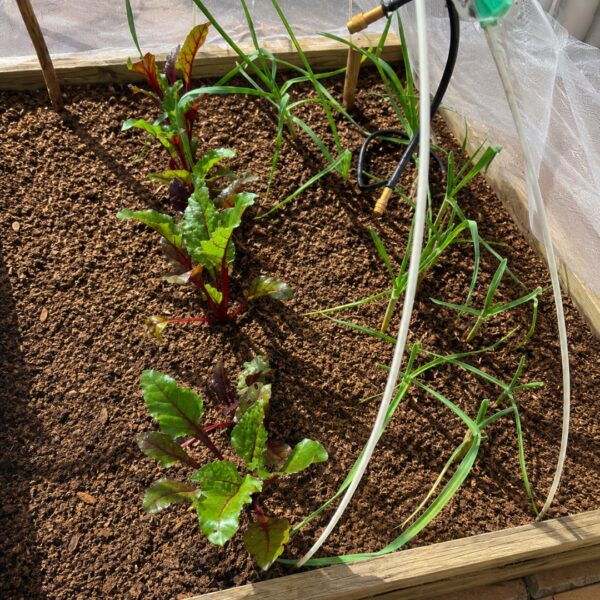
Garlic and beetroot
Turn garlic cloves into new plants
Garlic is another satisfying crop to grow at home.
Choose a firm, healthy bulb and separate it into individual cloves. Leave the papery skin on each clove and plant it with the pointed end facing upwards and the flatter root end facing downwards.
Each healthy clove has the potential to grow into a new garlic bulb. Depending on the original bulb, that could mean starting 10 or more plants from one shop-bought garlic bulb.
Plant the cloves in well-drained soil and give them plenty of light. Keep the soil moist but not waterlogged, as garlic does not enjoy sitting in soggy conditions.
You can also place a clove with its base just touching a small amount of water to encourage roots before planting. Be careful not to submerge the whole clove, as it may rot.
Garlic requires patience, but seeing those first green shoots push through the soil makes the wait worthwhile.
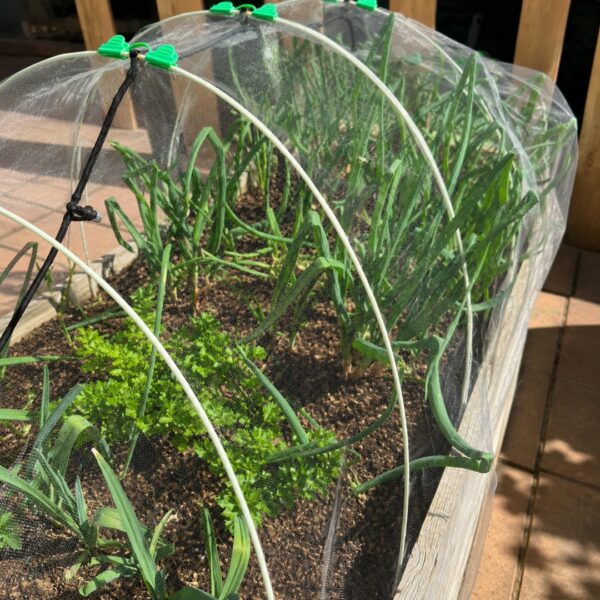
Red onion, celery and leeks
Spring onions and leeks that keep giving
Spring onions and leeks are among the easiest kitchen scraps to regrow.
When buying them, look for ones that still have some roots attached. Once you have used the green sections, keep the white bottom ends with the roots intact.
Place the ends upright in a glass or jar containing a small amount of water. The roots should be covered, but most of the white section should remain above the water.
Put the container in a bright spot and change the water regularly. New green growth can appear surprisingly quickly.
You can continue growing them in water for a while, but planting them in soil will usually produce stronger growth. Snip off what you need for salads, soups, stews, casseroles and garnishes, while leaving enough of the plant to continue growing.
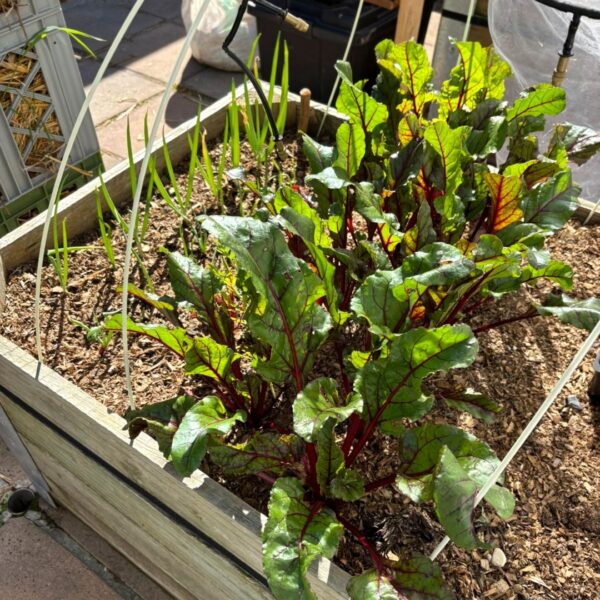
Beetroot and spring onions
Don’t throw away those beetroot tops
With beetroot, it is the top section where the leaves emerge that deserves a second look.
Cut off a small piece from the top and place it in a shallow dish of water, with the leafy side facing upwards. Keep the water level low and refresh it regularly.
New leaves may begin growing from the centre. These young beetroot leaves can be added to salads or used in a similar way to other leafy greens. They have a distinctive, slightly earthy flavour.
Beetroot leaves contain useful nutrients, including fibre, vitamin C and folate, as well as minerals such as potassium, magnesium and iron.
Regrowing the top will not necessarily produce an entirely new beetroot, but it can give you fresh, edible leaves from something that might otherwise have gone into the bin.
A few home-grown beetroot leaves in a salad can make you feel as though you have done something very clever. And you have.
Start small and see what happens
Kitchen-scrap gardening does not require perfection, and it certainly does not need to cost a fortune. Some onions will grow enthusiastically. Others will sulk and do absolutely nothing. A garlic clove may surprise you, while another may decide it has no interest in becoming part of your gardening experiment.
That is all part of the fun.
Start with what you have, reuse a few containers and pay attention to what works in your particular space. Every home has different levels of sunlight, warmth and shelter, so experimenting is often the best teacher.
When something does grow, even one tiny green shoot, it brings a small kind of happiness that is difficult to explain until you have experienced it yourself.
And if that little shoot eventually saves you from buying another bunch of spring onions, it feels even better.
Article by Lesley, YEI contributor
Next in Lesley’s Money-Saving Garden:
Discover how seeds, tomato slices, bubble wrap and an old bread bag can help you grow food
for next to nothing.