
Discover how to grow potatoes in crates, reuse everyday containers and stretch your grocery budget with Lesley’s practical money-saving gardening tips.
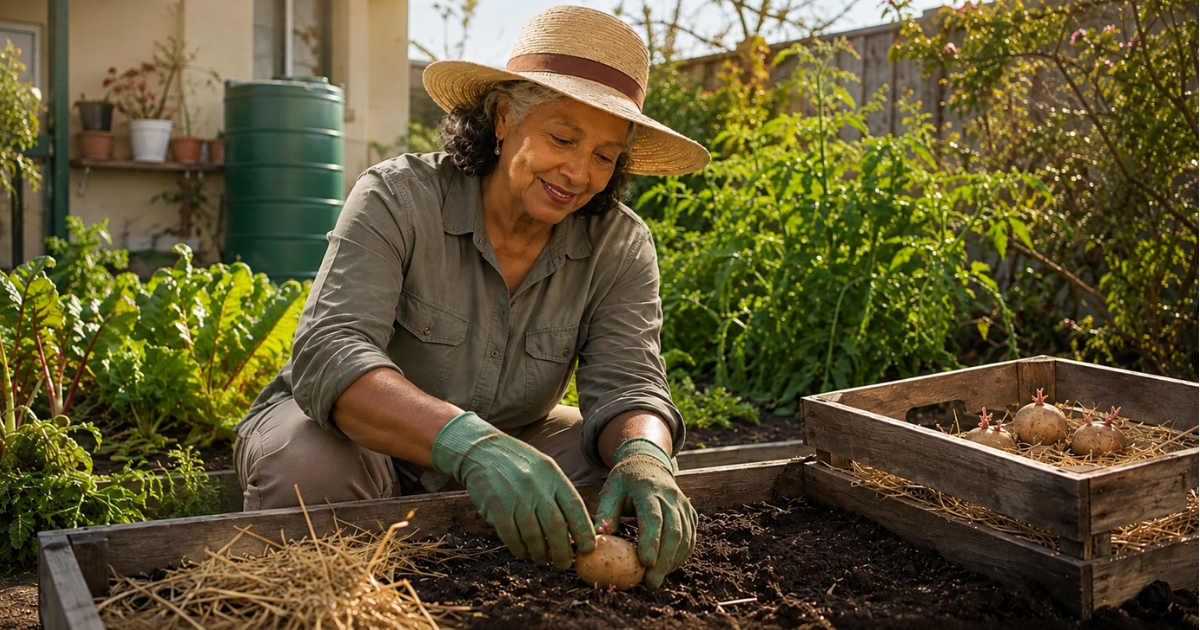
In the first two parts of this series, Lesley shared ways to regrow kitchen scraps and start plants using seeds, bubble wrap and other everyday items.
For the final article, we turn to one of the most useful and satisfying vegetables to grow at home: the humble potato.
Potatoes are used in countless meals, can be prepared in many different ways and are particularly rewarding to harvest. The best part is that you can start with an ordinary potato from your kitchen and grow it in an old crate, large container or grow bag.
It is another reminder that money-saving gardening does not need to involve expensive equipment. Very often, it begins with something you already have.
The Humble Potato That Keeps Giving
Have you ever opened a cupboard and discovered that a potato has started growing little shoots or “eyes”? Rather than throwing it away, you may be able to plant it.
Each sprouting potato has the potential to produce several new potatoes beneath the soil. Under good growing conditions, one seed potato may produce around five to ten potatoes, although harvests vary according to the variety, soil, space, weather and care the plant receives. It is difficult not to feel excited when you plant one potato and later uncover an entire little crop.
For the best chance of success, use healthy certified seed potatoes where possible, as supermarket potatoes may have been treated to delay sprouting or could carry disease. However, if you already have a firm, healthy potato sprouting in the cupboard, it can still become an interesting gardening experiment.
Do not plant potatoes that are soft, mouldy, rotten or badly damaged.
 How to Grow Potatoes in an Old Crate
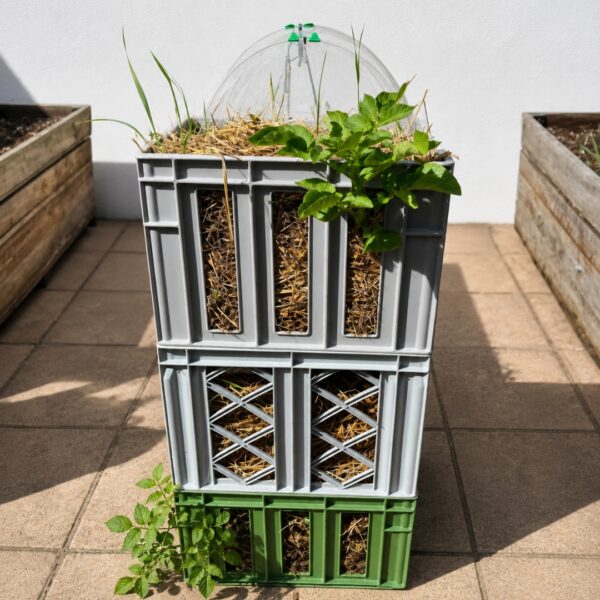
An old wooden or sturdy plastic crate can make an excellent potato planter, provided it has adequate drainage. Line the sides with straw, cardboard or a suitable breathable material to help prevent the soil from falling through large gaps. Make sure you do not block the drainage holes at the bottom. Add approximately 8 to 10cm of loose, good-quality soil or potting mix. Place your sprouting potatoes on top, with the shoots facing upwards, leaving enough space between them to grow. Cover them with another layer of soil, followed by a light layer of straw. Water gently, keeping the soil damp but never waterlogged.
Place the crate in a sunny position. Potatoes generally grow best with plenty of light, but the developing potatoes must remain covered and protected from the sun.
If bending is difficult, raise the crate onto a stable surface at a comfortable working height. Make sure it is secure, as the container will become heavier as you add soil and water.
Keep Covering the Growing Stems
As the green potato shoots grow taller, gradually add more soil, compost or straw around the stems. Leave the upper leaves exposed so that the plant can continue growing. This process is known as “earthing up”. It helps keep developing potatoes covered and gives the plants additional protected space.
Do not allow the potatoes themselves to become exposed to sunlight. Potatoes that turn green may contain increased levels of solanine, a naturally occurring toxin, and should not be eaten.
Continue watering regularly, particularly during dry or hot weather, but avoid soaking the soil. Good drainage is essential, as constantly wet conditions may cause the potatoes to rot.
When Will Your Potatoes Be Ready?
Potatoes take time, so this is not an overnight gardening project.
The plants will first produce plenty of leafy green growth above the soil. Depending on the variety and growing conditions, flowers may also appear.
If you would like a few smaller “new” potatoes, you can carefully feel around beneath the soil once the plants have flowered and remove only what you need. Try not to disturb the roots more than necessary.
For a more mature crop, wait until the foliage begins to yellow and die back naturally. Reduce watering and allow the soil to dry slightly before harvesting.
Then comes the best part: tip out the container or gently dig through the soil to discover what has been growing underneath.
It feels a little like searching for buried treasure.
Plant a Little Now, Harvest for Longer
If you have enough space, try staggering your planting instead of planting all your potatoes at once.
Plant one container first, then start another a few weeks later. This may spread out your harvest rather than giving you more potatoes than you can use at one time.
Staggered planting does not guarantee a continuous supply, as the seasons and local growing conditions also play a role. However, it can make your home-grown food easier to manage.
Before planting, check which varieties suit your part of South Africa and the time of year. Potatoes generally prefer cooler growing conditions and can struggle in extreme heat or heavy frost.
Your local nursery or gardening group can offer useful advice for your region.
Reuse What You Already Have
Potatoes do not have to be grown in a traditional garden bed. Old crates, large buckets, sturdy tubs, grow bags and deep containers can all be useful.
Whatever you choose, make sure it is clean, strong, deep enough for the developing crop and able to drain freely. If you use a bucket or solid container, add sufficient drainage holes before filling it with soil.
Avoid containers that previously held chemicals or other unsafe substances.
Look around before buying anything new. You may already have a suitable container, some cardboard, a little straw or compost that can be put to work.
That is part of the pleasure of money-saving gardening. It encourages you to see possibilities in ordinary things.
Grow More Without Spending More
Growing food at home may not replace your entire grocery shop, but every successful harvest can make a small difference.
A handful of potatoes, a bunch of regrown spring onions or a few home-grown tomatoes means there is one less ingredient to buy. When several small harvests are added together, the savings can begin to grow too.
There are also other rewards. You know where your food came from, you experience the satisfaction of growing it yourself and you have a useful reason to spend time outdoors.
Gardening can keep your hands busy and your mind engaged. It gives you something to check on each morning and something to look forward to.
The potatoes may be growing underground, out of sight, but the anticipation is always there.
When Your Plants Refuse to Cooperate
Not every potato-growing attempt will produce a basketful.
A plant may struggle because of too much water, too little sunlight, unsuitable soil, pests or simply bad luck. Sometimes you do everything you think is right and still end up with three potatoes the size of marbles.
That is gardening.
Try not to see an unsuccessful crop as wasted time. Notice what happened, make a few changes and try again. Perhaps the container needed better drainage, the potatoes needed more space or the timing was not right for your area.
Every gardener has plants that flourish and others that seem determined to test their patience.
Share the Harvest and the Know-How
If your potato harvest is generous, share a few with a neighbour, friend or family member. Home-grown produce makes a simple but thoughtful gift.
You could also share what you have learned. Show someone how you planted your crate, pass on a few seedlings or exchange gardening ideas.
YEI readers are likely to have plenty of clever growing methods of their own. Some may remember techniques used by parents or grandparents, while others may have discovered new ways to garden in smaller spaces. Sharing those ideas keeps useful knowledge alive and helps more people discover that growing food does not need to be complicated or costly.
The Joy Is in the Growing
The greatest reward from this three-part gardening series is not only the food or even the savings.
It is the pleasure of trying something new. It is walking outside in the morning to see whether anything has changed. It is finding a purpose for an old crate, a sprouting potato or a kitchen offcut.
Some things will grow beautifully. Others will sulk, struggle or disappear altogether.
But when you tip out that first crate and find even a few potatoes hiding beneath the soil, the feeling is wonderful. You planted one small thing, cared for it and created something useful.
That is the real magic of gardening. Start with what you have, learn as you go and celebrate every little harvest.
Article by Lesley, YEI contributor
Part 1: Lesley’s Money-Saving Garden:
Grow it again: Turn kitchen scraps into fresh food
Part 2: Lesley’s Money-Saving Garden:
Seeds for almost nothing – clever ways to start growing