
Considering Mauritius for your next chapter? APTEC Mauritius explains what South Africans should clarify first – from the Retirement Residence Permit and documentation to banking appointments and next steps.
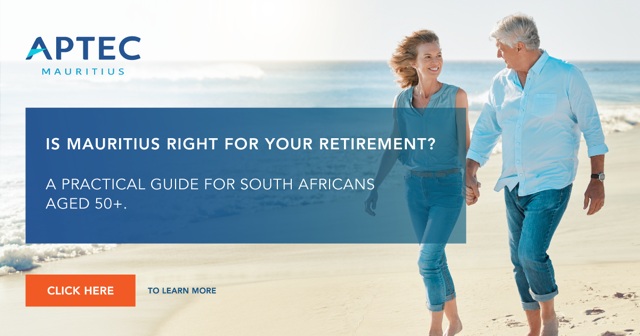
Planning a Move to Mauritius: What South Africans Should Clarify First
A practical guide to residency, documentation, banking and next steps.
For many South Africans, Mauritius begins as an attractive idea: a stable island close to home, with a convenient time zone, direct travel links and a lifestyle that feels international yet accessible. But once the idea becomes serious, the questions become more concrete.
Can I qualify for residency? What documents will I need? How long does the process take? What needs to happen before I begin?
The first step is not to rush into paperwork. It is to clarify whether Mauritius is genuinely viable for your circumstances.
Start with the correct residency pathway
Mauritius offers several residency and permit options, each suited to a different type of applicant. For South Africans aged 50 and over, the Retirement Residence Permit is often the most relevant starting point. It suits those who want to live in Mauritius without working or running a business there.
For couples, only one spouse needs to be 50 or older to apply as the main applicant. The other spouse can be included as a dependant and does not need to have reached 50.
Other pathways suit those who intend to work, invest, run a business or spend extended time in Mauritius before deciding long term.
The right route depends on your circumstances: age, income, source of funds, dependants and long-term intentions all matter. A structured eligibility assessment should always come first.
Understand the documentation early
Residency applications are document-led. Even where the pathway is straightforward, delays usually come from supporting documents that are incomplete, outdated or incorrectly prepared.
Applicants may need to provide a valid passport, recent bank statements, proof of income or pension, police clearance certificates, marriage certificates or unabridged birth certificates.
The most efficient approach is to build the full checklist early, then work through it in order.
Prepare for banking, arrival and property decisions
Opening a Mauritian bank account is an important, regulated step requiring proof of identity, proof of address, source-of-funds information and supporting financial records. APTEC Mauritius assists with the account-opening process and arranges the necessary appointments for clients on arrival, keeping each step clear and orderly.
Property decisions should follow the residency plan, not lead it. Before choosing where to live, clarify eligibility, timing, documentation and banking first.
Factor in healthcare and everyday life
Mauritius runs a two-tier system: public healthcare is open to permit holders, while most new arrivals use the private sector for faster access and international-standard care. Everyday life, meanwhile, feels reassuringly familiar: English is widely used in business and administration, the time difference is small, and home is a direct flight of about four hours away.
The right next step
If Mauritius has moved from a possibility to a serious consideration, the next step is a confidential eligibility assessment.
APTEC Mauritius has been assisting South African clients with residency and relocation since 2012. APTEC will help you understand the available pathways, prepare the correct documentation and move through the process with clarity and confidence.
Retiring in Mauritius: Frequently Asked Questions
1. Can South Africans retire in Mauritius?
Yes. South Africans aged 50 and over may apply for the Mauritius Retirement Residence Permit, provided they meet the qualifying criteria. For many retirees, Mauritius offers an appealing combination of lifestyle, stability, accessibility from South Africa and a well-established expatriate community.
2. What income do I need to retire in Mauritius?
Applicants must demonstrate a guaranteed monthly income of USD 2,000, or USD 24,000 annually. These funds must be transferred into a Mauritian bank account and used towards living expenses on the island, including rent, household costs and day-to-day needs.
3. How long is the Retirement Residence Permit valid for?
The Retirement Residence Permit is generally valid for up to 10 years and may be renewed, provided the permit holder continues to meet the required conditions. This makes it suitable for retirees considering Mauritius as a long-term lifestyle and residency base.
4. Can my spouse or dependants join me?
Yes. A spouse and qualifying dependants may be able to apply for residence permits linked to the main permit holder, subject to the relevant requirements. It is best to assess the full household situation before starting the application process.
5. Do I need to buy property in Mauritius to retire there?
No. Buying property is not required for the Retirement Residence Permit. Many retirees choose to rent first while they explore the island, understand different regions and decide whether Mauritius is the right long-term fit.
6. What is healthcare like in Mauritius for South African retirees?
Mauritius offers both public and private healthcare services. Many expatriates and retirees choose to supplement the public healthcare system with private medical care, depending on their personal preferences and healthcare requirements. Before relocating, it is advisable to review medical insurance options, ongoing medication needs, and the availability of healthcare services that may be relevant to your individual circumstances.
7. What is the best first step if I am considering retirement in Mauritius?
The best first step is a confidential eligibility assessment. This helps clarify whether you meet the permit criteria, what documents are required, and what practical steps are involved before making financial, property or lifestyle commitments.
Contact Sasha Ella, South Africa Representative for APTEC Mauritius.
Sasha Ella
Email: sasha@aptec.mu
Tel: +27 60 823 1769
Website: www.aptec.mu