
Choose retirement living that supports your independence today and provides personalised care and reassurance as your needs change.
Choosing a retirement community is about far more than finding an attractive apartment in a convenient location. It is about choosing a place that can continue to support you if your health, mobility or personal circumstances change.
The right community should offer an enjoyable lifestyle today, while providing the reassurance that additional care is available tomorrow. This is where The Village Retirement Home in Durban, KwaZulu-Natal, offers an important advantage. With independent living, assisted living, semi-frail and frail care available within one community, residents can remain in familiar surroundings as their needs evolve.
Think beyond what you need today
When exploring retirement options, it is natural to focus on your current lifestyle. You may be active, independent and looking forward to fewer household responsibilities, greater security and more opportunities to socialise.
However, retirement can span many years, and needs can change gradually or unexpectedly. A temporary illness, reduced mobility, the loss of a spouse or the development of a chronic condition may mean that some additional support becomes necessary.
This does not always mean giving up your independence. It may simply mean needing help with medication, bathing, dressing, meals or other daily tasks.
Choosing a community that offers different levels of care allows you to plan for these possibilities without allowing them to dominate your decision.
A continuum of care, not four separate decisions
Independent living, assisted living, semi-frail and frail care are often viewed as separate stages, each requiring a new search and another difficult decision.
At The Village Retirement Home, they form part of a continuum of care. Residents can begin by living independently in their own space, with access to the community’s services, amenities and social life. If more support is needed later, assisted living can provide help while preserving as much autonomy as possible. Semi-frail and Frail care is also available, if needs be, when more intensive nursing and personal care become necessary.
This means that changing needs do not automatically require a move to an unfamiliar establishment. Residents can remain within the community they know, close to friends, familiar staff and established routines.
For couples, this can be especially important. If one partner requires a higher level of care before the other, both can remain connected within the same community.
Why the nurse-to-resident ratio matters
A retirement community may have beautiful gardens, spacious rooms and an impressive list of amenities. However, the true quality of its care often becomes most apparent when a resident needs help.
The Village places particular importance on its high nurse-to-resident ratio. In practical terms, this means nursing staff have a greater opportunity to know residents personally, understand their routines and notice small changes in their health or behaviour.
A good staffing ratio can mean:
• Faster assistance when a resident calls for help
• More attentive medication management
• Earlier recognition of changes in health, appetite, mobility or mood
• More individualised care
• Better communication with families
• Greater reassurance during an illness or emergency
It is worth asking detailed questions about staffing when comparing retirement communities. Who is available at night? How quickly can assistance be provided? How are emergencies handled? How well do staff know the residents in their care? These details matter enormously when care is needed.
The cost of moving more than once
Moving home is demanding at any age. A Financial Advisor known to YEI says “The best time to move to a retirement home or village is by the age of 70”. It’s probably safe to say that the majority of retirees are well into their 70s when they make the move. The move requires packing up possessions, making financial arrangements, adapting to unfamiliar surroundings and rebuilding daily routines.
For an older person, particularly someone experiencing declining health or the loss of a partner, moving can be emotionally exhausting. Leaving behind friends, trusted staff and a familiar environment may add to an already difficult transition.
There are financial considerations too. Multiple moves can bring removal costs, deposits, administrative fees, new furnishings and changes to care arrangements. Families may also need to take time away from work or travel long distances to assist.
Choosing a retirement community that can accommodate changing needs may reduce the likelihood of having to repeat this process. Selecting well upfront is not only about convenience. It can protect continuity, emotional wellbeing and financial security.
Thirty years of understanding changing needs
The Village has over 30 years of experience in retirement living and senior care. That experience matters because ageing is deeply personal. No two residents follow exactly the same path, and support should never be based on a rigid, one-size-fits-all approach.
Over three decades, The Village has developed an understanding of how residents’ needs may change and how care can be adjusted without unnecessarily taking away independence.
Families also benefit from this experience. Knowing that a loved one is supported by an established team provides valuable peace of mind, especially when health concerns arise.
A lifestyle to enjoy now
Planning for future care does not mean compromising on the quality of life you want today.
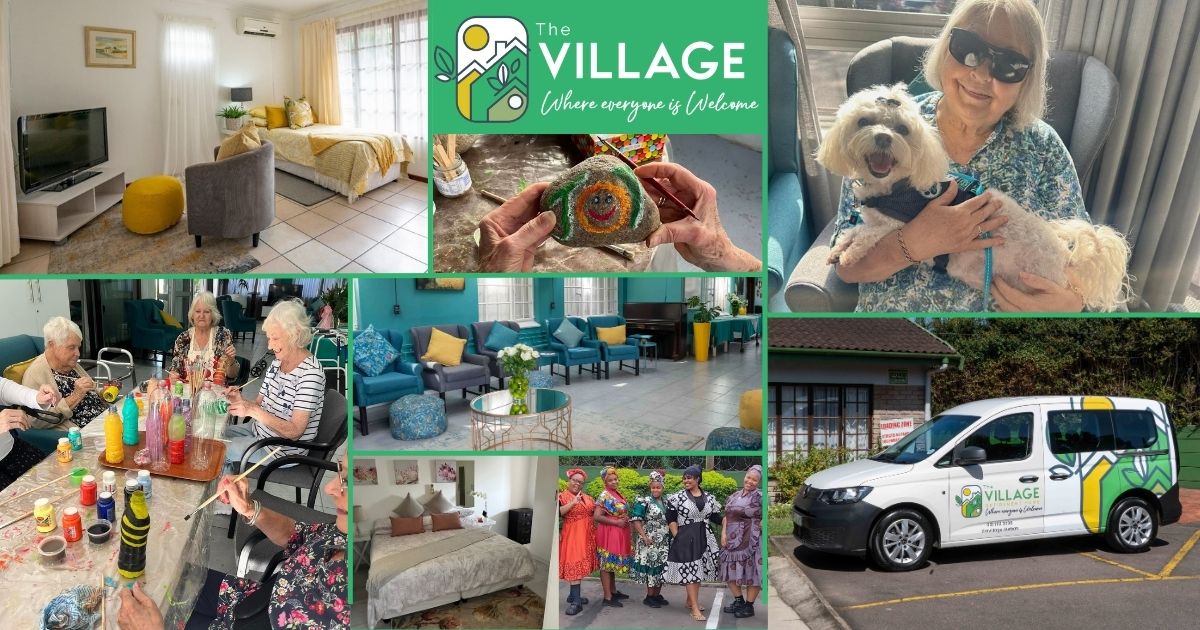
The Village offers spacious accommodation, attractive grounds and gardens, walking paths, communal areas and opportunities for activities and social connection. Maintenance, repairs, gardening, laundry and cleaning are managed, giving residents more time to enjoy their lives.
Residents can also benefit from freshly prepared meals, with two or three-meal options available. A nutritionist helps ensure that meals can be tailored to individual dietary requirements.
Practical resilience is another important consideration. The Village has two boreholes with four-phase UV filtration to provide clean drinking water, a solar system that powers the property during the day and a generator to maintain the electricity supply.
Security, on-site healthcare support and emergency response systems provide further reassurance for residents and their families.
Choose for today and tomorrow
When comparing retirement communities, ask yourself two questions: “Could I enjoy living here now?” and “Could this community still support me if my needs changed?”
The best choice is one that respects your independence, supports an active and connected lifestyle, and offers appropriate care when it is needed.
At The Village, residents are not simply choosing accommodation. They are choosing a community designed to grow with them.
Frequently Asked Questions
1. When should I start looking at retirement communities?
It is best to explore your options while you are still active and independent. This gives you time to compare communities and make an informed choice without pressure.
2. What is a continuum of care?
A continuum of care means that independent living, assisted living, semi-frail and frail care are available within the same community. Residents can access more support as their needs change.
3. What is the difference between assisted living and frail care?
Assisted living provides help with everyday activities while allowing residents to retain independence. Frail care offers more intensive nursing and personal support.
4. Why is the nurse-to-resident ratio important?
A strong nurse-to-resident ratio allows staff to provide more personalised attention, respond promptly and recognise changes in a resident’s health or behaviour sooner.
5. Can couples remain together if their care needs differ?
Some retirement communities offer different levels of care on the same property, allowing couples to remain close even when one partner needs additional support. Ask each community how this is managed.
6. What costs should I ask about before moving?
Request a clear breakdown of accommodation, meals, healthcare, levies, utilities, additional care and annual increases. Also ask which services may carry extra charges.
7. What should I look for when visiting a retirement community?
Consider the atmosphere, cleanliness, security, staff interaction, accommodation, meals, activities and gardens. Speak to residents if possible and ask how changing healthcare needs are handled.
Article sponsored by The Village Retirement Home, Durban